E Blues
The home key of guitar blues.
The blues scale is minor pentatonic with one extra note — the ♭5 — and in E it sits across the open strings exactly where the whole tradition of guitar blues was worked out.
 Play E Blues on your phoneDownload free
Pentatonic plus the blue note
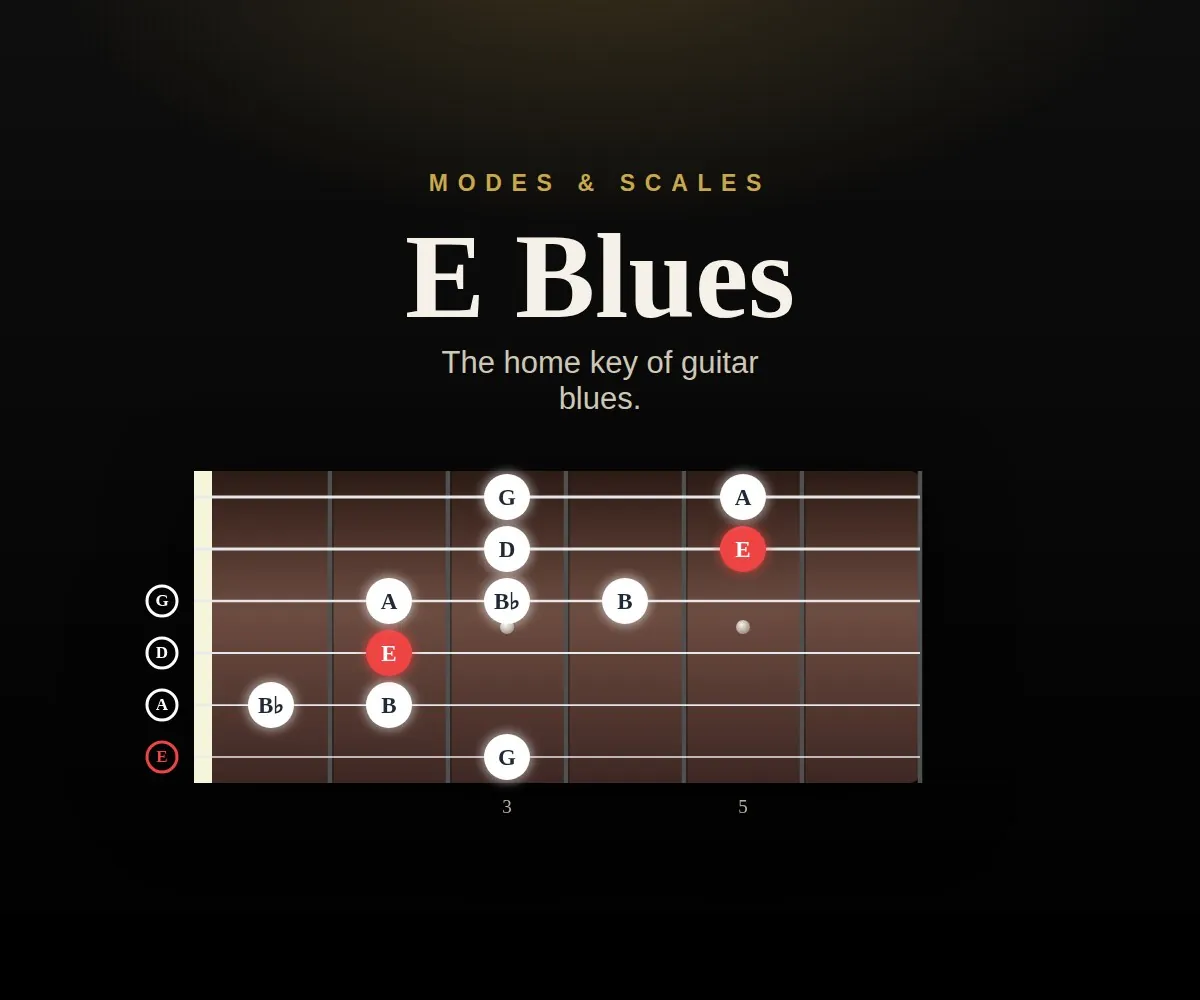
E blues is E G A B♭ B D. It is E minor pentatonic with B♭ added — the ♭5, the 'blue note'. Six notes, and only one of them is the reason it is called the blues scale.
- It is minor pentatonic plus the ♭5 (B♭).
- The ♭5 sits between the 4 and the 5.
- Remove that one note and you are back to pentatonic.
How to actually use the ♭5
The B♭ is a passing note, not a destination. Slide into it from A or bend up to it and keep going to B. Sitting on it sounds wrong; moving through it sounds like the blues.
- Pass through the ♭5 — do not land on it.
- A → B♭ → B is the classic move.
- Bending into it from the 4th is where the vocal quality comes from.
Over the whole twelve bars
E blues works over E7, A7 and B7 — the entire progression — without changing a note. That is why blues players can improvise for a chorus without thinking about the changes at all.
- One scale covers all three chords of an E blues.
- The open low E lets you drone the root under a lick.
- Mix it with E major pentatonic for the full B.B. King sound.
One added note turns a pentatonic into the blues scale — and the trick is to move through it, never to land on it.
 Prefer paper? All 408 scale charts in one bookThe Guitar Chord & Scale Encyclopedia · paperback and KindleSee the book →
MoreThanModes.com · Visual. Clear. Musical.