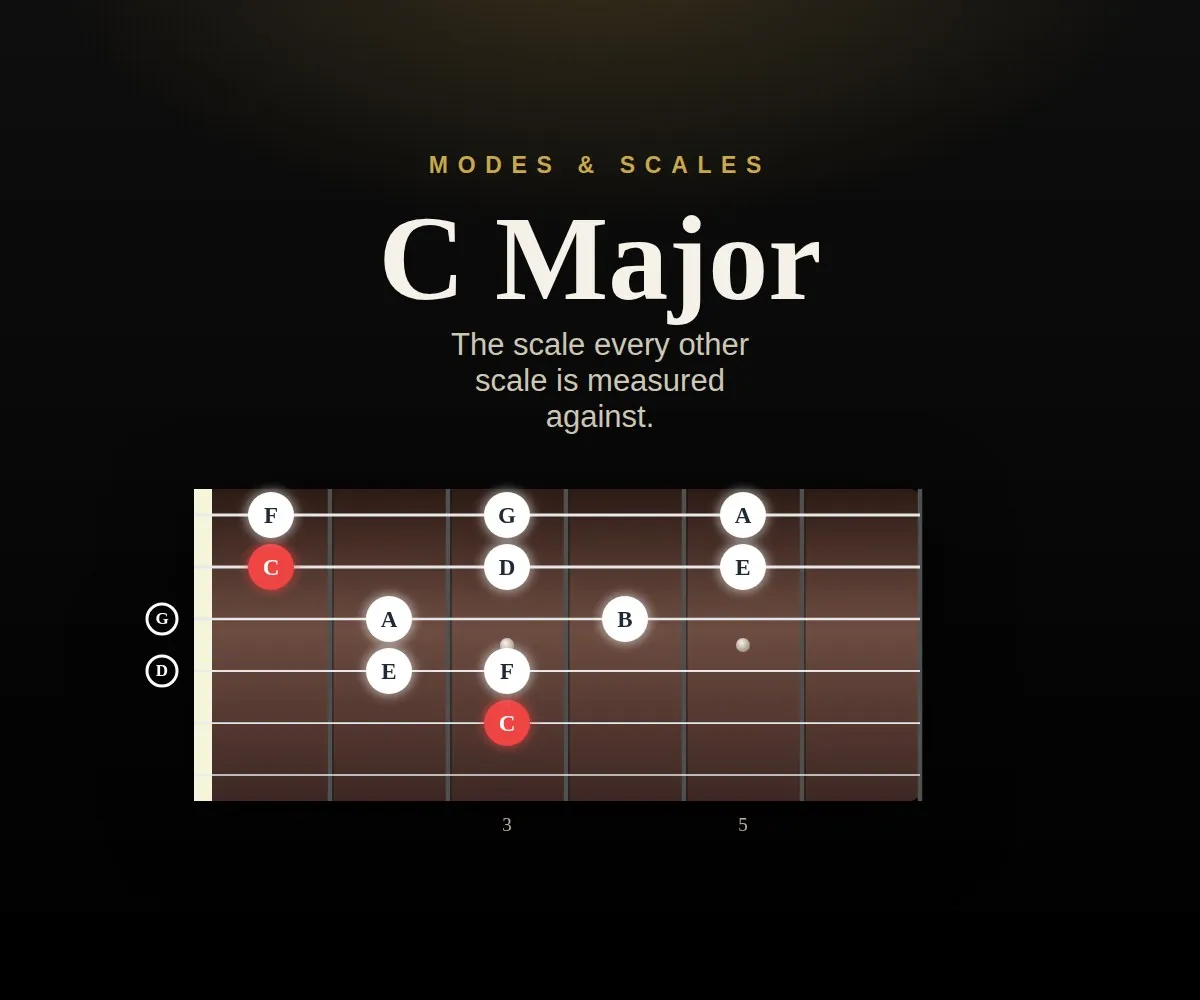
C Major
The scale every other scale is measured against.
The major scale is the reference point of Western music — seven notes, no sharps or flats in C, and the source of every mode and every key.
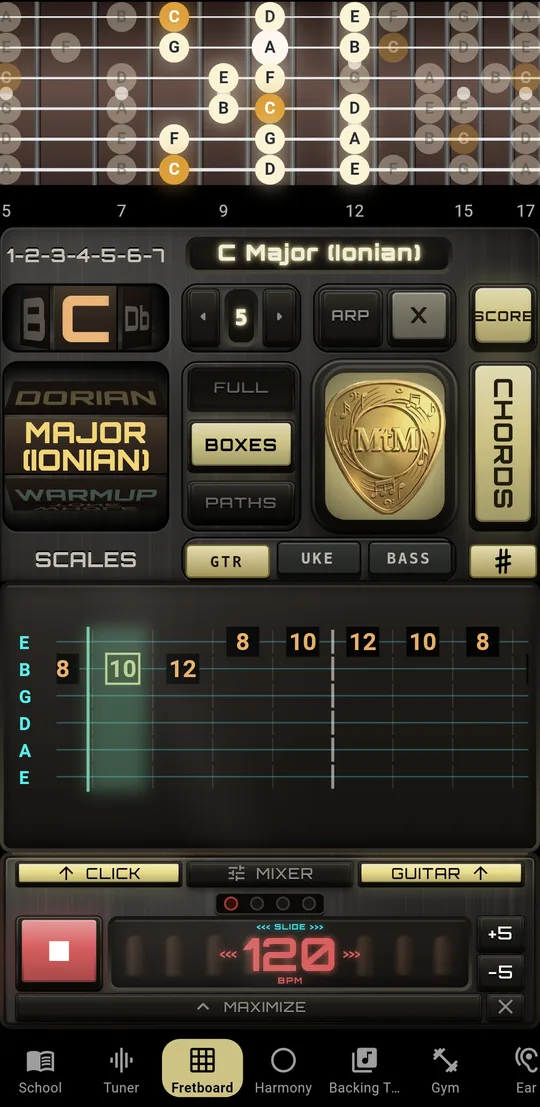 Play C Major on your phoneDownload free
Seven notes, the master scale
C Major is C D E F G A B — the white keys of the piano. Its interval pattern (whole-whole-half-whole-whole-whole-half) is the template every major key copies.
- No sharps, no flats — the purest reference.
- The major 3 (E) and major 7 (B) give it its bright, resolved sound.
- Every mode is just this scale started from a different note.
The leading tone
The 7th (B) sits a half-step below the root and pulls hard toward C. That tension-and-release is the engine of tonal music.
- The major 7 (B) is the leading tone — it wants to resolve up to C.
- The half-steps (E-F and B-C) shape the scale's character.
- Land on C after B for the most 'home' sound there is.
Where major lives
Any song in a major key lives here. A I–IV–V–I (C–F–G–C) is the most common progression in popular music, and C Major covers all of it.
- Use it over any major-key progression.
- I–IV–V (C–F–G) is built entirely from this scale.
- Master it first — every mode is a variation on it.
All chords in the key of C major — hear them on the circle →
Learn the major scale cold, and every mode, key and chord becomes a small step away from something you already know.
 Prefer paper? All 408 scale charts in one bookThe Guitar Chord & Scale Encyclopedia · paperback and KindleSee the book →
MoreThanModes.com · Visual. Clear. Musical.