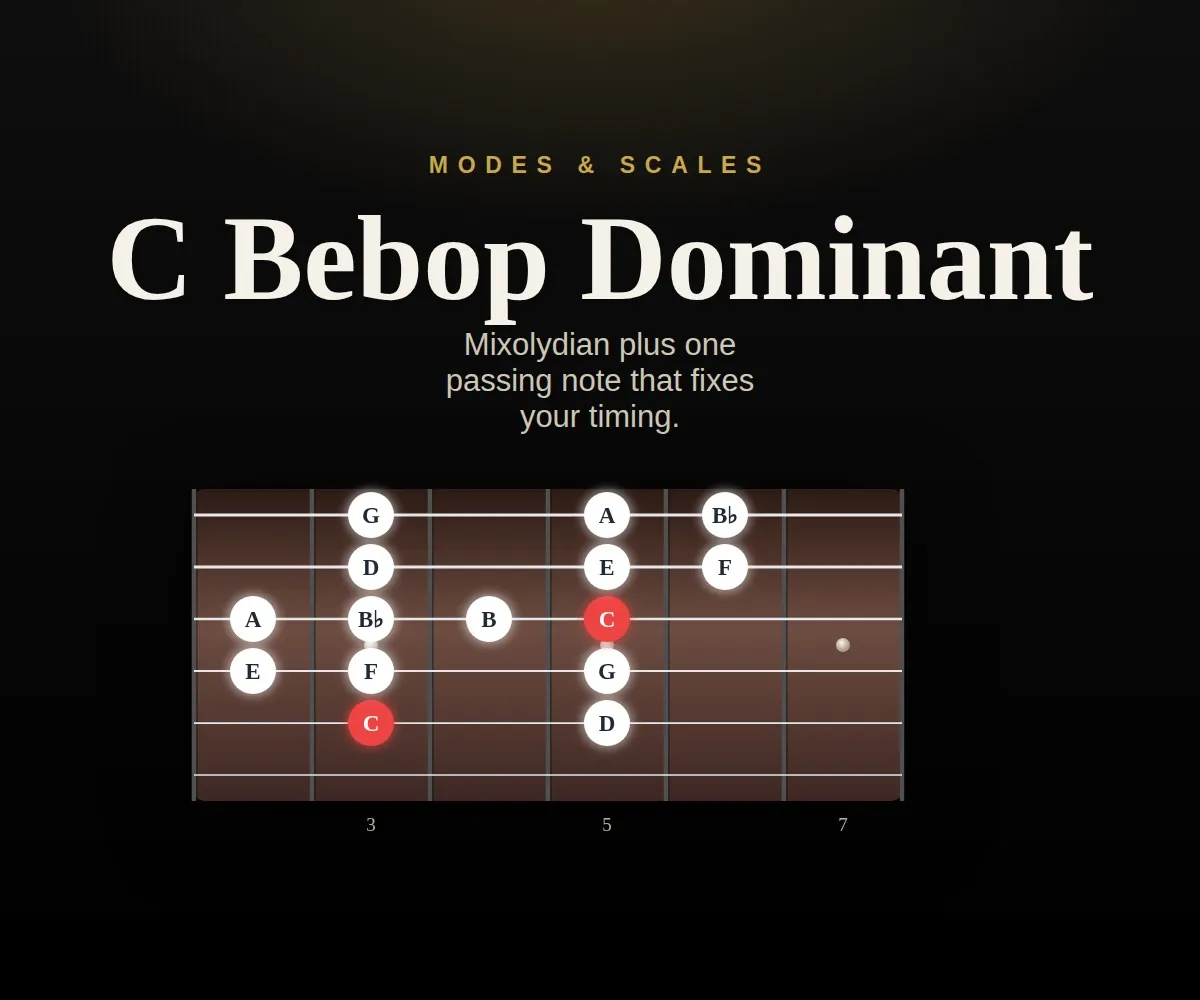
C Bebop Dominant
Mixolydian plus one passing note that fixes your timing.
The bebop scale is not a new sound — it is a rhythmic device. Adding an eighth note to a seven-note scale means that running it in eighth notes puts the chord tones back on the beat.
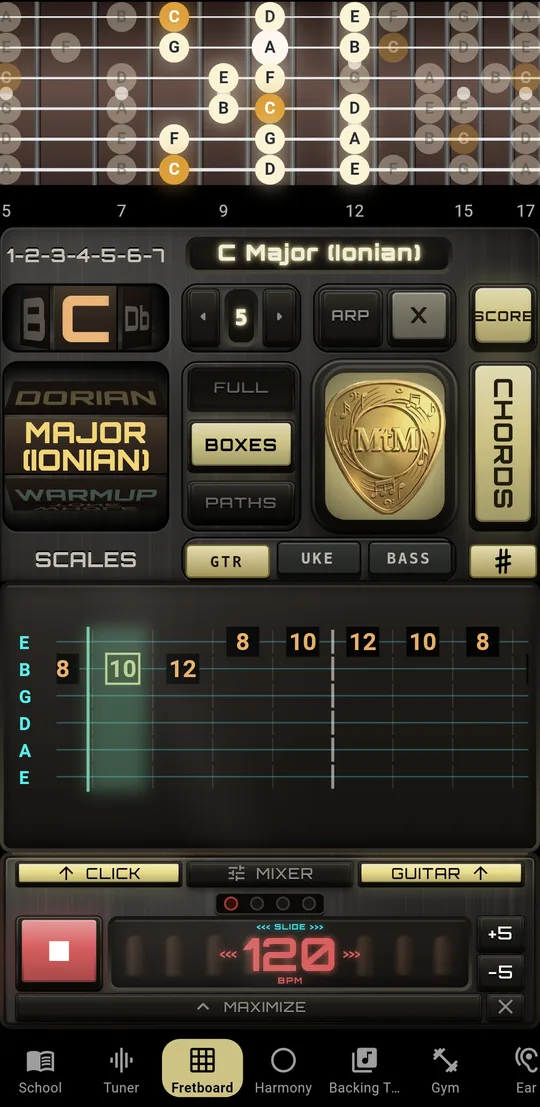 Play C Bebop Dominant on your phoneDownload free
Eight notes, on purpose
C bebop dominant is C D E F G A B♭ B. It is C Mixolydian with a natural 7 (B) added between the ♭7 and the root. Eight notes per octave instead of seven.
- It is Mixolydian plus a passing natural 7.
- Eight notes fill exactly one bar of eighth notes.
- The added note is chromatic, not part of the harmony.
Arithmetic, not harmony
Run a seven-note scale in eighth notes and after one octave the chord tones have shifted onto the offbeats. With eight notes they land back where they started — root, 3, 5 and ♭7 stay on the strong beats, bar after bar.
- Seven notes in eighths drift off the beat; eight notes do not.
- Chord tones stay on the downbeats automatically.
- This is why bebop lines sound anchored at speed.
Descending, over a C7
It works best coming down from the root over a C7. Start on C, run down through B, B♭, A, and the line places the ♭7 exactly where the ear wants it. Ascending, use it more sparingly.
- Play it over a C7 or a C dominant vamp.
- Descending from the root is where the extra note fits best.
- Treat the natural 7 as a passing note — never land on it.
The bebop scale is a rhythmic fix, not a new colour: one extra note, and every chord tone lands on a beat.
 Prefer paper? All 408 scale charts in one bookThe Guitar Chord & Scale Encyclopedia · paperback and KindleSee the book →
MoreThanModes.com · Visual. Clear. Musical.