G Major
The scale every other scale is measured against.
G major is the reference. Every mode, every chord and every 'flat this, sharp that' in music theory is described as a change to this scale — so it is worth knowing on the neck, not just on paper.
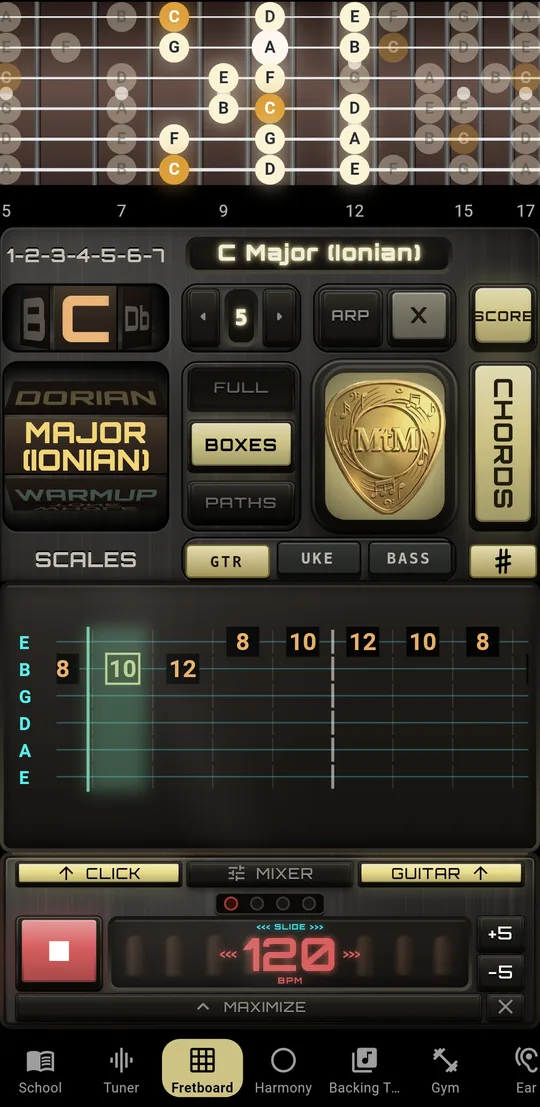 Play G Major on your phoneDownload free
Seven notes, one sharp
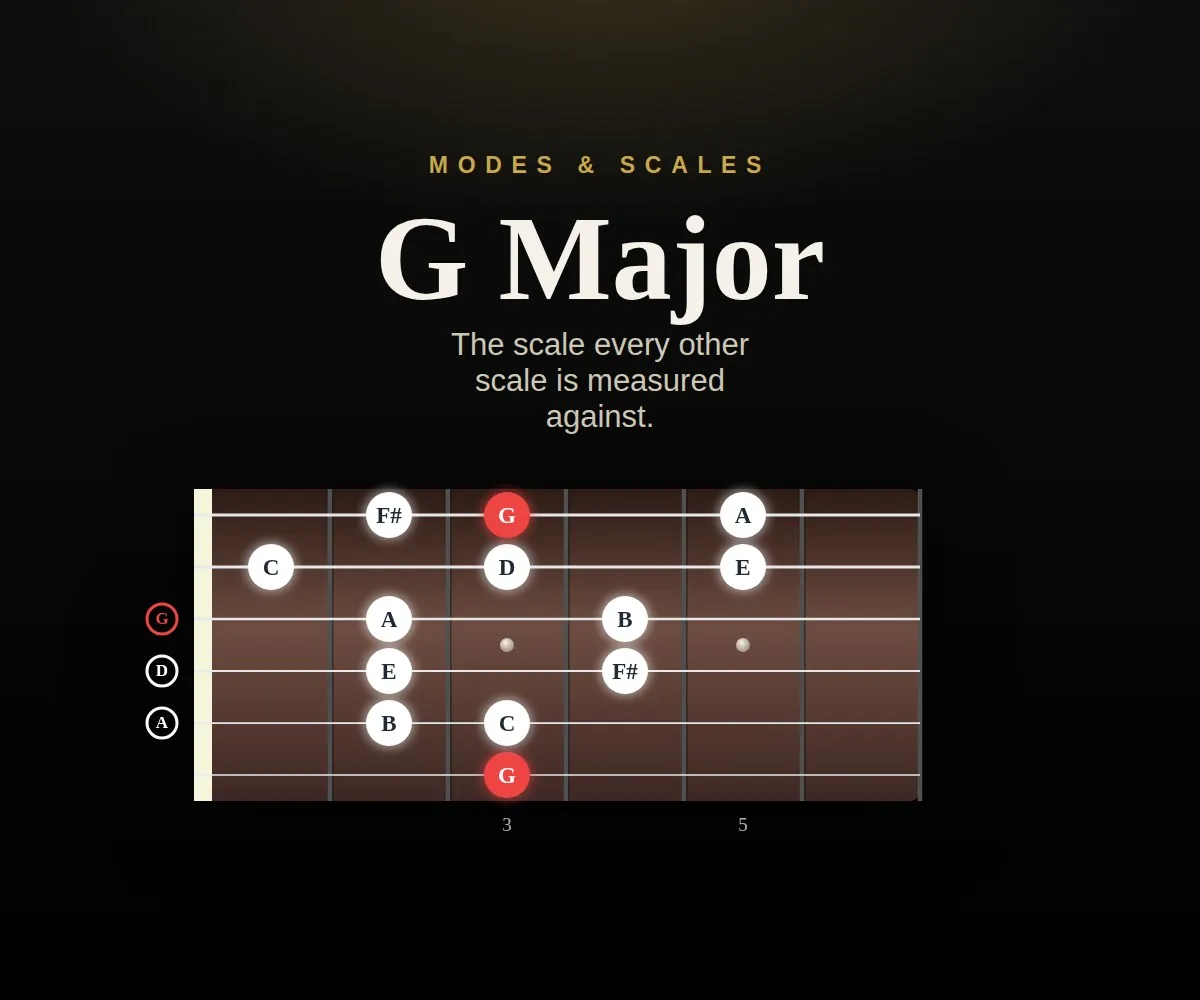
G major is G A B C D E F#. One accidental, F#, and it is the note that does all the work: it sits a half-step below the root and leans on it. Play G A B C D E F natural and the scale collapses into G Mixolydian.
- The major 3 (B) is what makes it major.
- The 7 (F#) is the leading tone — it pulls up to G.
- One sharp is the whole difference between G major and C major.
Why G sits so well on the neck
G major is the key where open strings and moveable shapes agree. The open G, B, D and E strings are all in the scale, so an open position and a barred position at the 3rd fret sound like the same scale rather than two different worlds.
- Four of the six open strings belong to G major.
- Position 2 of the 3NPS system starts at the 2nd fret — easy to reach.
- Learn it here first, then slide the same shapes to any key.
The chords that come out of it
Harmonise it and you get G Am Bm C D Em F#dim. That is where I–V–vi–IV (G–D–Em–C) comes from — the progression under a large share of pop music, all seven notes of this one scale.
- G–D–Em–C is I–V–vi–IV in this key.
- Every chord in the key uses only these seven notes.
- If a song is in G, this scale plays over all of it.
All chords in the key of G major — hear them on the circle →
Learn G major well and you have not learned one scale — you have learned the ruler that every other scale in this library is measured with.
 Prefer paper? All 408 scale charts in one bookThe Guitar Chord & Scale Encyclopedia · paperback and KindleSee the book →
MoreThanModes.com · Visual. Clear. Musical.