C Minor Pentatonic
Five notes, and not one open string to lean on.
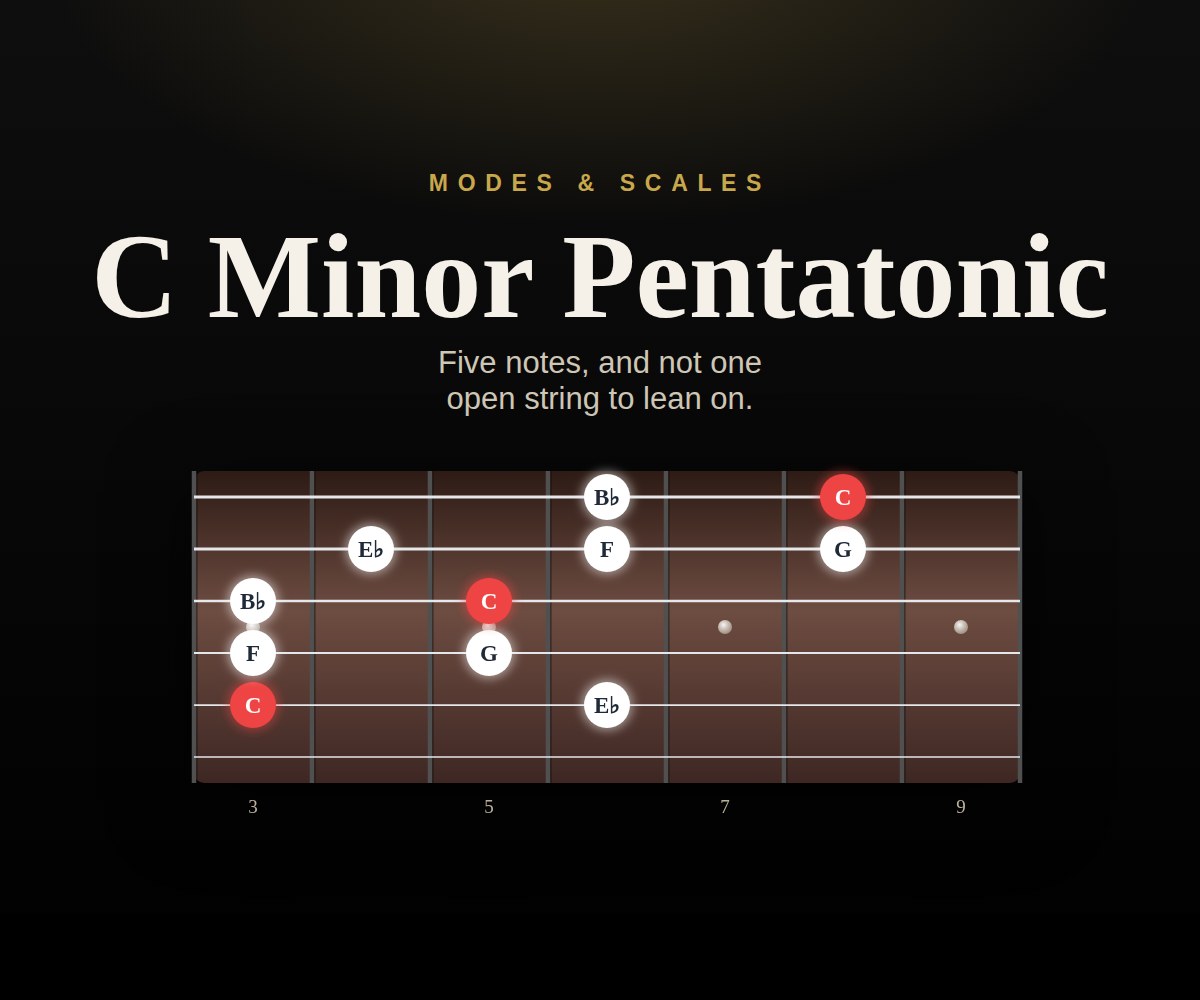
C minor pentatonic is C, E♭, F, G and B♭. It is the scale that shows whether you know the shapes or just know where your fingers usually go: in C nothing falls on an open string, so every note has to be fretted and every shape moved on purpose.
The same five notes, none of them free
The formula never changes: 1 ♭3 4 5 ♭7. What changes in C is the geography. The first box sits at the 8th fret, in the middle of the neck, with no open strings anywhere near it — so the shape is the only thing holding you up.
- C E♭ F G B♭ — the 2nd and ♭6 of C minor are gone.
- Box 1 starts at the 8th fret, root on the low E string.
- Nothing rings open, so sloppy fretting has nowhere to hide.
The key horn players chose, and guitarists inherited
A great deal of funk, soul and jazz sits in C minor because it suits brass and piano. That is why guitarists end up here: not because the neck invites it, but because the band is already in C. Learning the shape at the 8th fret is the price of sitting in.
- Common in funk, soul and jazz horn charts.
- Box 1 at the 8th fret, box 2 at the 10th.
- Shift the whole shape down three frets and you are in A minor.
Where C minor pentatonic lives
Play it over a Cm vamp, a C minor blues, or anything moving between Cm, Fm and G7. Because there are no open strings, the same fingering slides up or down to any other key without a single change.
- Fits Cm, Cm7 and a C minor blues.
- Add G♭ and it becomes the C blues scale.
- The shape is fully moveable — learn it once, use it twelve times.
C minor pentatonic is the shape test: no open strings, no shortcuts, and the fingering you learn here works in all twelve keys.
MoreThanModes.com · Visual. Clear. Musical.