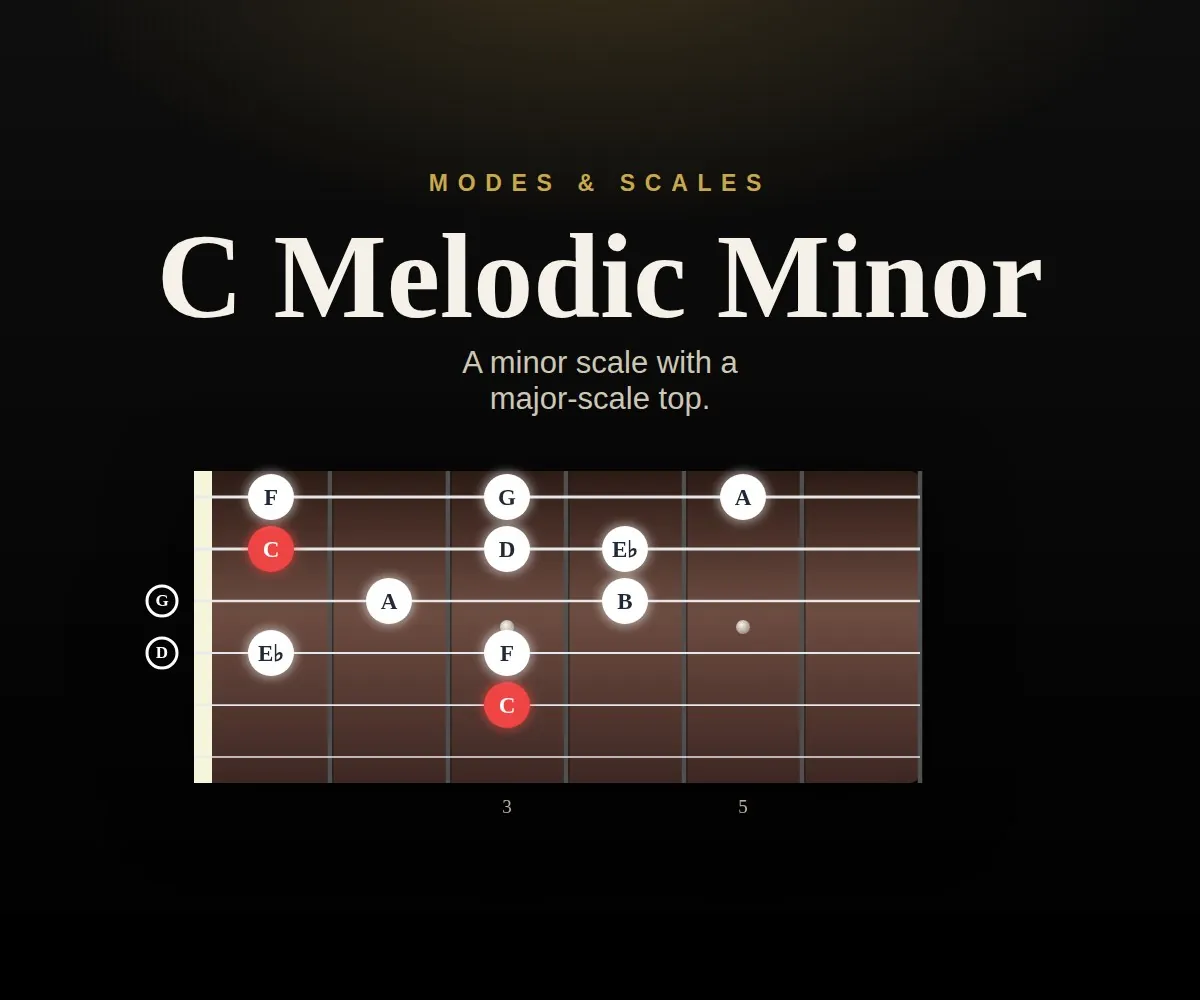
C Melodic Minor
A minor scale with a major-scale top.
Melodic minor takes a minor scale and raises both the 6th and 7th — so it sounds minor at the bottom and major at the top. It is the backbone of modern jazz.
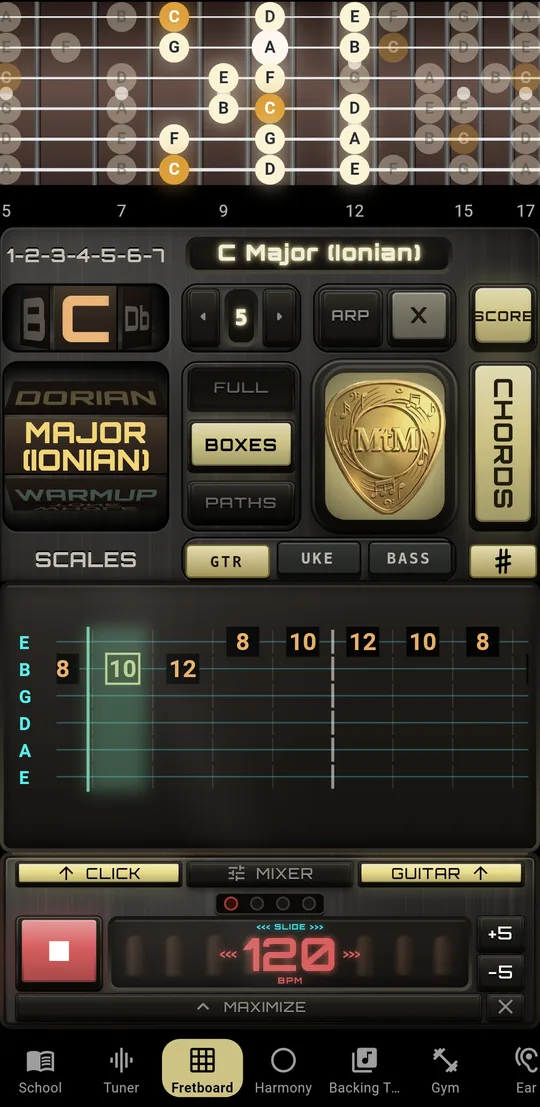 Play C Melodic Minor on your phoneDownload free
Minor below, major above
C Melodic Minor is C D E♭ F G A B. Only one note separates it from C major: the ♭3 (E♭). The raised 6 (A) and 7 (B) give it a bright, smooth upper half.
- The ♭3 (E♭) is the only note that makes it minor.
- The natural 6 (A) and natural 7 (B) brighten the top.
- Think 'major scale with a flat 3rd'.
The minor-third clash
The ♭3 (E♭) against those bright upper tones is the sound — a minor chord with a major-scale shimmer above it. Jazz players live on this tension.
- The ♭3 over a bright top is the color.
- It works beautifully over a minor-major 7 chord.
- Land on the E♭ to keep it clearly minor.
Where it lives
In jazz, melodic minor is a source scale for a whole family of sounds — over a minor-major chord, and (from its 4th and 7th) the Lydian dominant and altered scales.
- Use it over a m(maj7) chord.
- The root of the modern jazz 'melodic minor' system.
- One flat note away from the major scale you already know.
Flatten just the 3rd of a major scale and you get melodic minor — minor-sounding, but with a bright top that jazz is built on.
 Prefer paper? All 408 scale charts in one bookThe Guitar Chord & Scale Encyclopedia · paperback and KindleSee the book →
MoreThanModes.com · Visual. Clear. Musical.