G Minor Pentatonic
Five notes with nowhere to hide — no open strings.
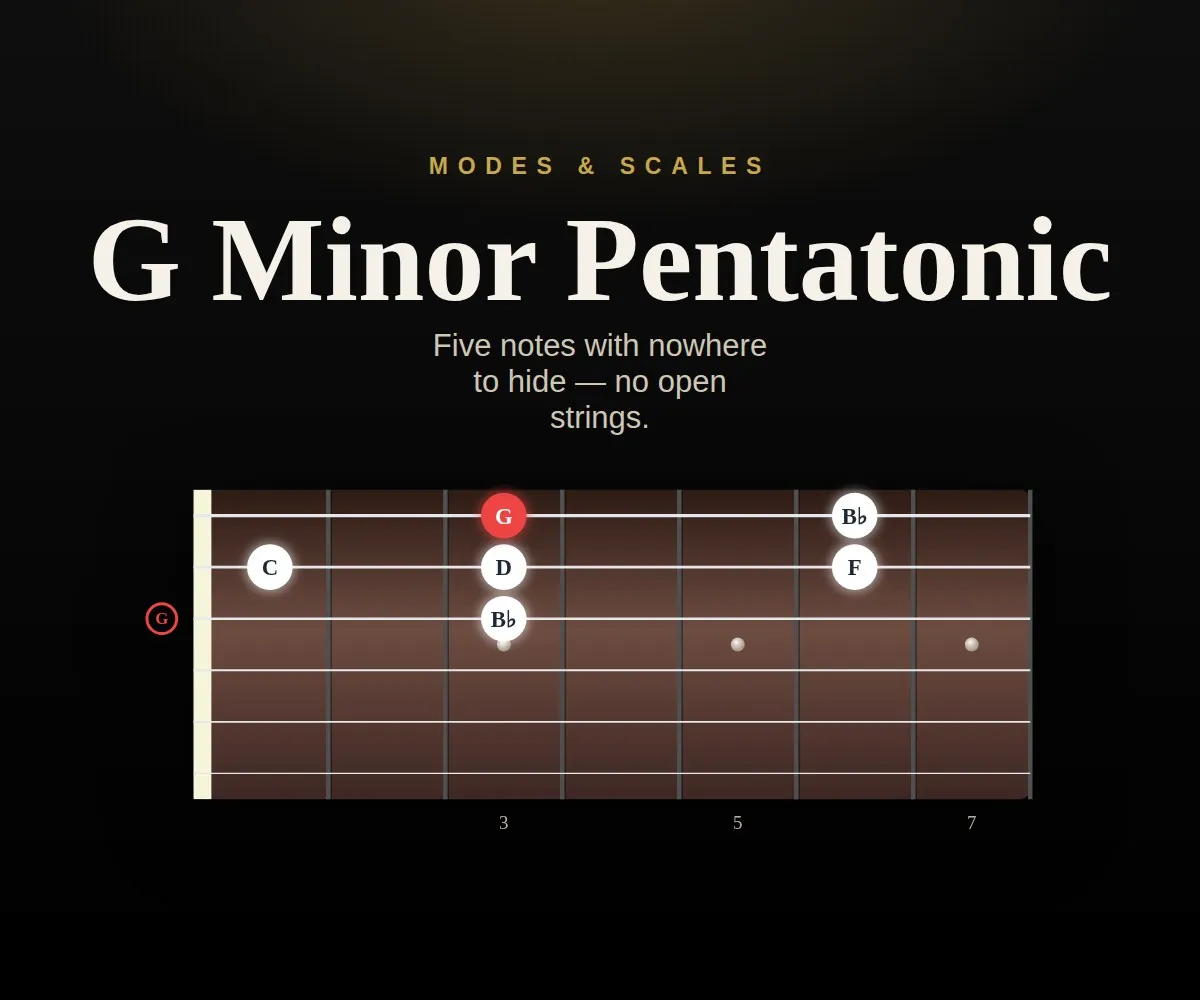
Minor pentatonic in G is the same five-note shape everyone learns in A or E, moved to a key with no open strings available. That is the point: it forces you to actually know the shape.
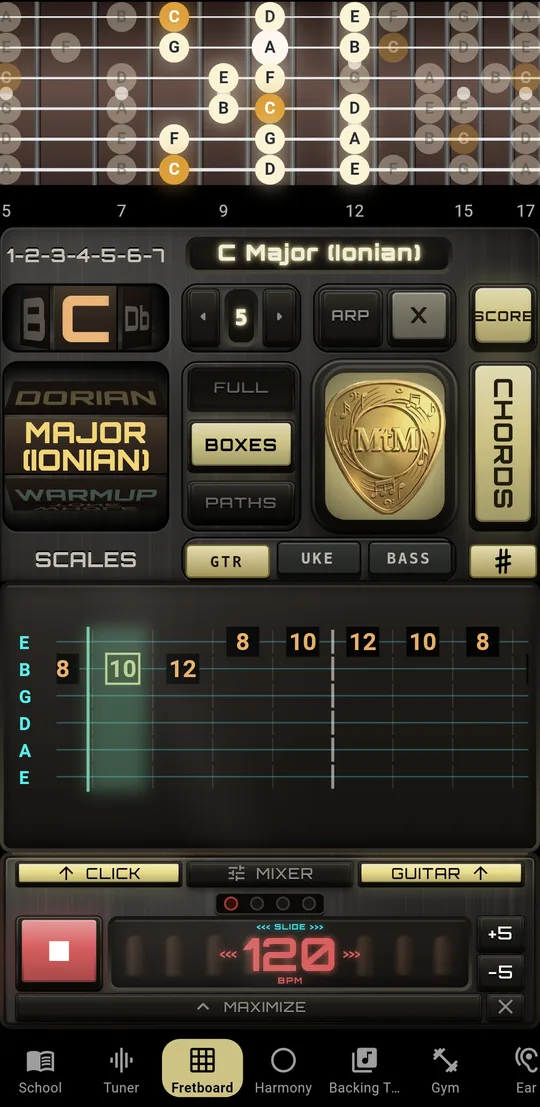 Play G Minor Pentatonic on your phoneDownload free
Five notes, two gaps
G minor pentatonic is G B♭ C D F. It is natural minor with the 2nd and the ♭6 removed. Those two notes are the ones most likely to clash, which is why what is left sounds right over almost anything.
- It is the minor scale minus the 2 and the ♭6.
- The ♭3 (B♭) and ♭7 (F) carry the minor sound.
- Five notes means fewer wrong answers.
Why G and not A
The famous box shape starts at the 3rd fret in G. Nothing rings open, so every note is under a finger and the shape has to be memorised rather than half-guessed from open strings.
- Box 1 sits at the 3rd fret in G.
- No open strings means the shape must be genuinely learned.
- Slide the same box up two frets and you are in A.
Over a G blues, and beyond
It works over Gm and over G7 — over a whole G blues without changing a note. Add the ♭5 (D♭) and it becomes the G blues scale; leave it out and it stays clean enough for pop and rock.
- One scale covers an entire minor blues in G.
- Add the ♭5 to turn it into the blues scale.
- It also fits over G major-key rock, which is why it is everywhere.
Minor pentatonic in G is the same five notes you already know, in the key that will not let you cheat with open strings.
 Prefer paper? All 408 scale charts in one bookThe Guitar Chord & Scale Encyclopedia · paperback and KindleSee the book →
MoreThanModes.com · Visual. Clear. Musical.