Bends and Vibrato
What b, r, pb and ~ mean in a tab.
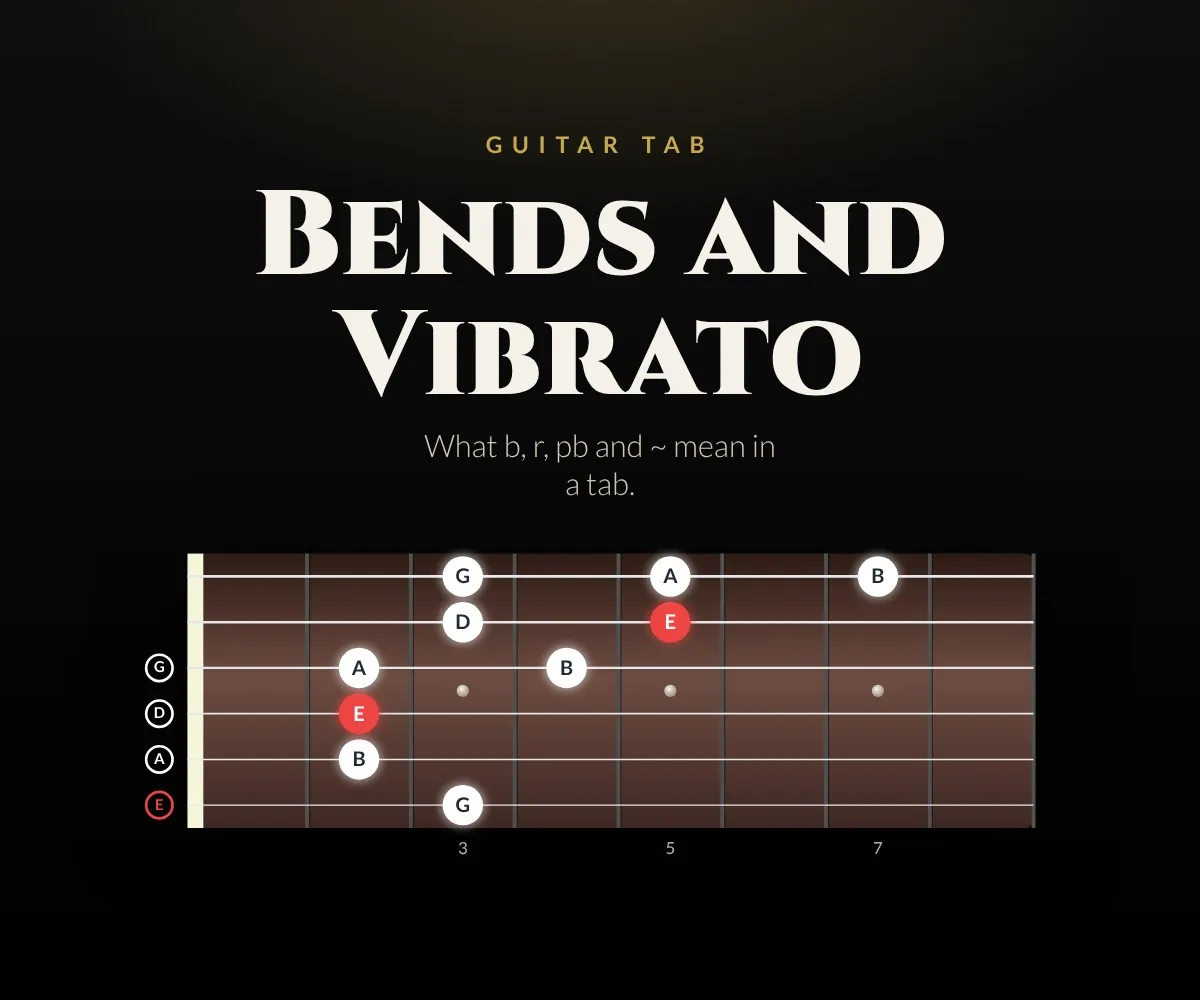
In a tab, 14b16 means fret 14, bent until it sounds like fret 16. Bends, releases and vibrato are the symbols that make a solo sing, and this lesson reads each one in E minor pentatonic, E G A B D.
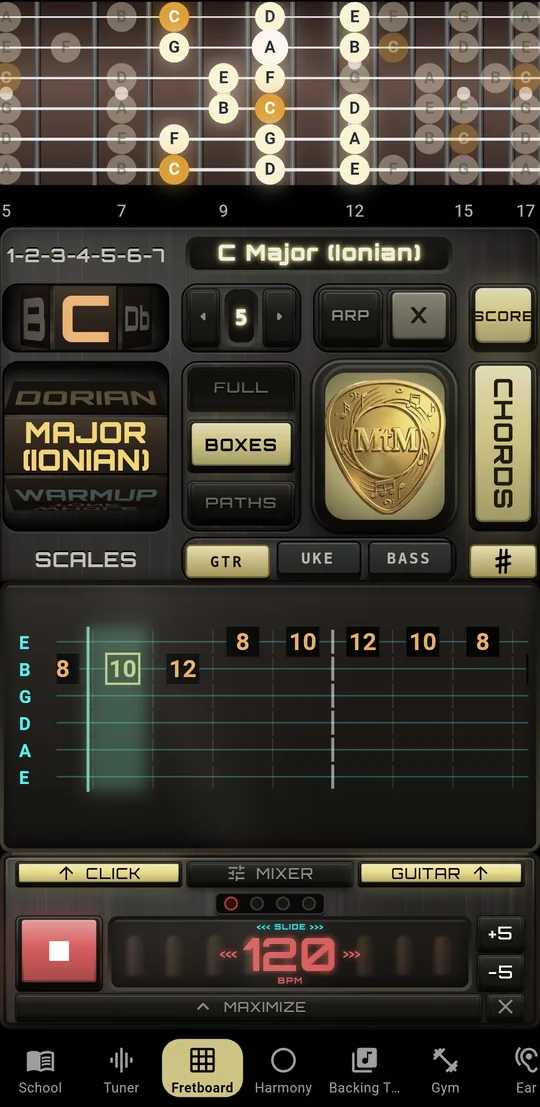 Practice it on your phoneDownload free
A bend has a target note
The symbol is a b (or an arrow) after the fret: 14b16 means play the 14th fret and push the string until it sounds like the 16th — a whole step, also written full. 1/2 is a half step, 1 1/2 a step and a half. A r after it, 14b16r14, is the release back down.
- b = bend; the number after it is the pitch to reach.
- full = one whole step, 1/2 = one fret, 1 1/2 = three frets.
- r = release; pb = pre-bend (bend first, then pick).
The two bends every solo uses
In the E minor pentatonic box at the 12th fret, the G string at the 14th fret is A; bend it a whole step and you reach B, the 5th. On the B string, the 15th fret is D; bend it a whole step and you land on E, the root. Check each one by playing the target fret first, then bending until the two match.
- G string, 14th fret, full bend: A up to B.
- B string, 15th fret, full bend: D up to E.
- Bend with three fingers behind each other, not one.
Vibrato: the ~ at the end
A wavy line ~ over a note means vibrato: small, even bends back and forth. Keep the speed steady and the width the same on every note, and a plain phrase starts to sound like a voice. In More Than Modes a Guitar Pro tab plays its bends and vibrato on the fretboard, so you can hear the target pitch before you chase it.
- ~ = vibrato; a longer line means a longer one.
- Bend to pitch first, add the vibrato second.
- Out-of-tune bends are the first thing listeners hear.
Every bend in a tab tells you where to land. Play the target note first, bend until they match, and the solo stops sounding out of tune.
 Prefer paper? All 408 scale charts in one bookThe Guitar Chord & Scale Encyclopedia · paperback and KindleSee the book →
MoreThanModes.com · Visual. Clear. Musical.