Find the Key by Ear
Hum the note the song wants to stop on.
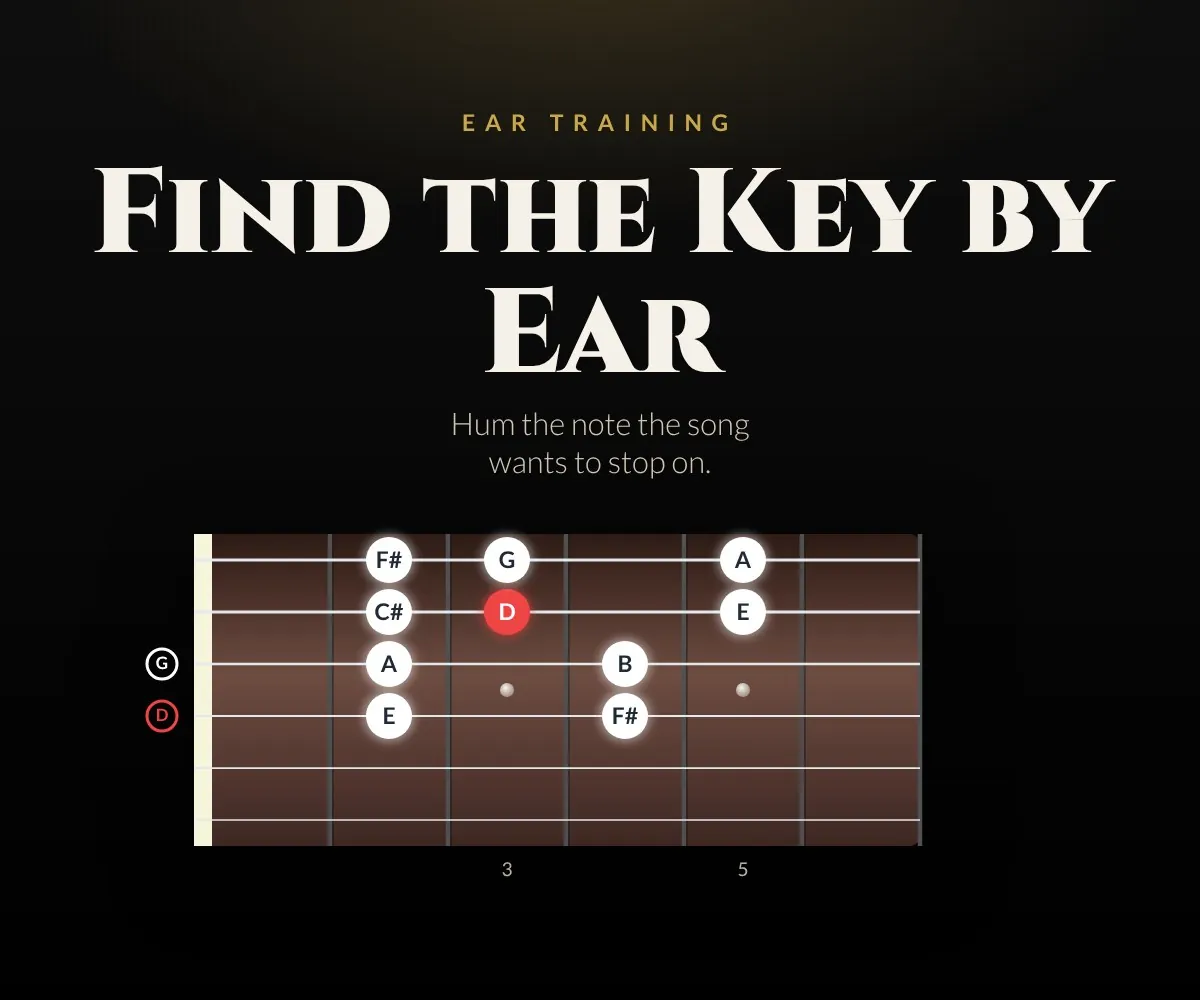
Every song leans toward one note that feels like home. Find that note on the guitar, check whether the song sounds major or minor, and you have the key. A song in D major, for example, lives on D E F# G A B C#.
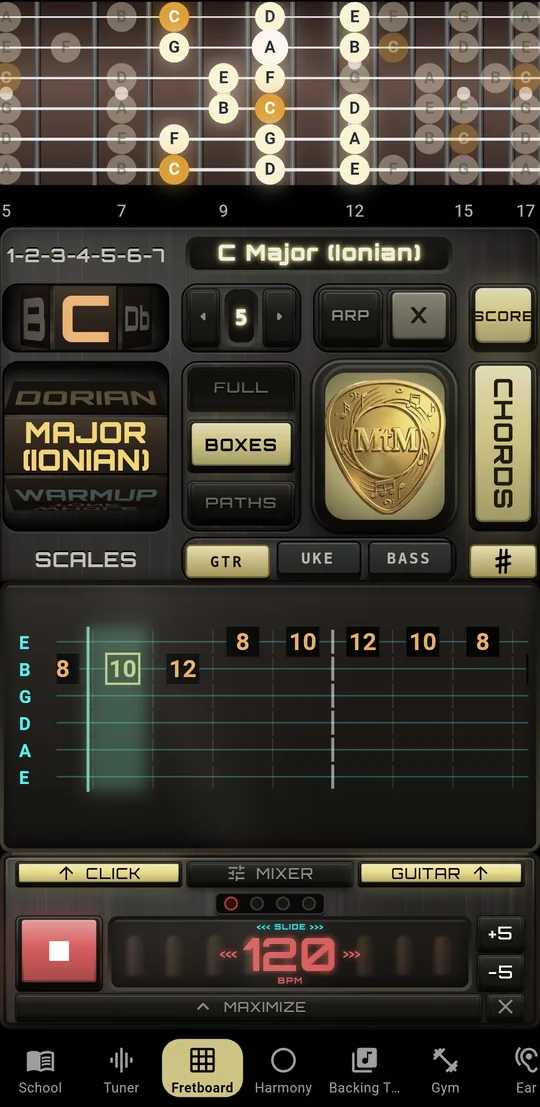 Practice it on your phoneDownload free
The note that sounds finished
Pause the song anywhere and hum the note that would end it. That note is almost always the key. The last chord of the song and the bass note under the chorus usually confirm it — songs like to start and end at home.
- Hum the note that would end the song.
- Check the last chord and the bass in the chorus.
- Songs usually begin and end on the home chord.
Find it on the low E string
Play single notes on the low E string, one fret at a time, while the song plays. Most will clash; one will sit under everything. Then play that note’s major and minor chord: if D sounds right and Dm sounds sour, the key is D major, and its chords are D, G, A and Bm.
- Slide up the low E string until a note sits right.
- Major or minor chord on it: the one that fits is the key.
- In D major the common chords are D, G, A and Bm.
Train it a little every day
Finding the key gets fast with practice: try it with every song you hear for a week. In More Than Modes you can train your ear with the ear trainer and play over backing tracks in any key, so hearing the home note becomes automatic.
- Do it with every song for a week.
- Relative keys share notes: D major and B minor.
- When in doubt, trust the note that sounds finished.
Hum the note that ends the song, find it on the low E string, and test major against minor. That is the key, almost every time.
 Prefer paper? All 408 scale charts in one bookThe Guitar Chord & Scale Encyclopedia · paperback and KindleSee the book →
MoreThanModes.com · Visual. Clear. Musical.