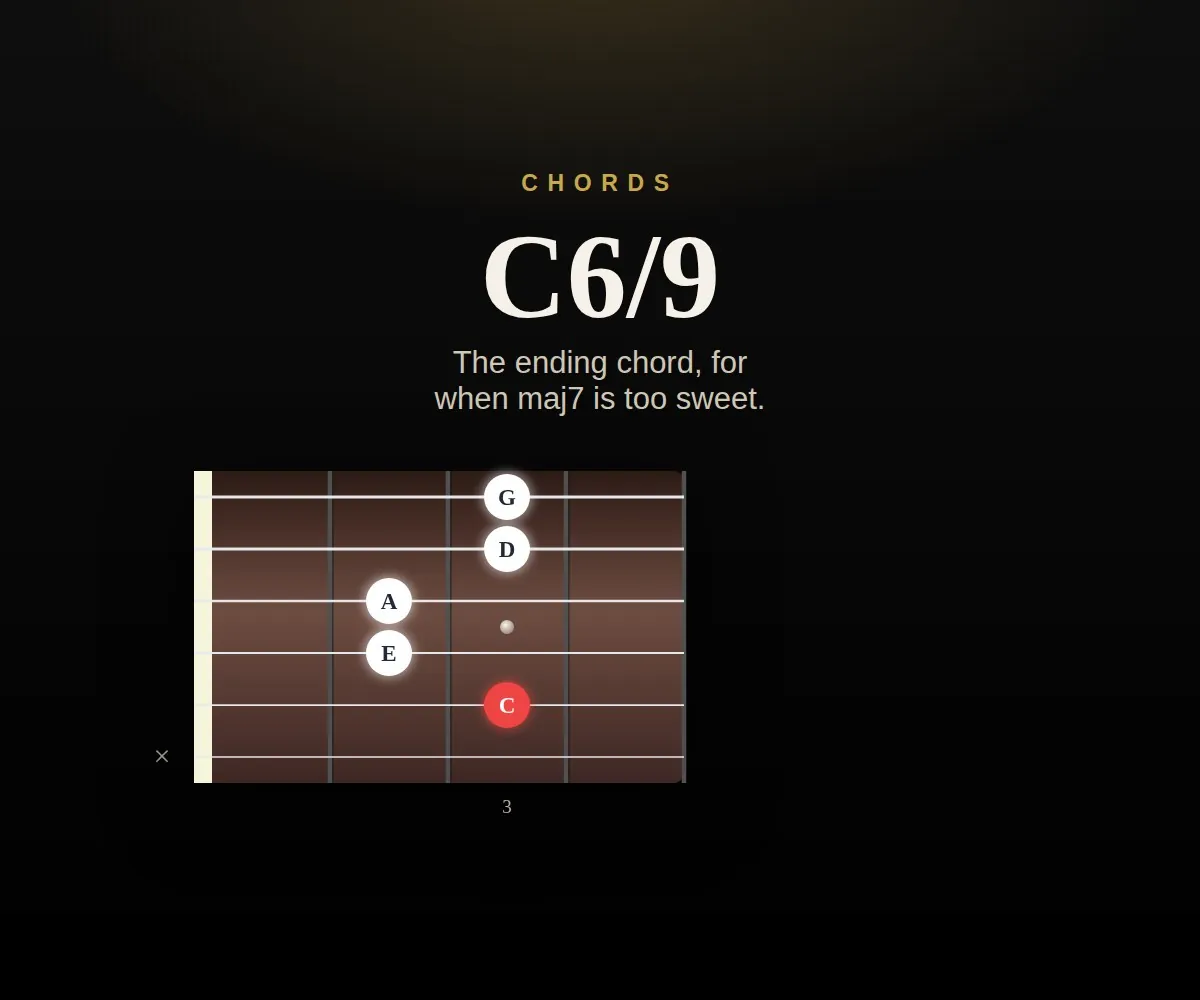
C6/9
The ending chord, for when maj7 is too sweet.
C6/9 stacks both a 6th and a 9th onto a major triad, and deliberately leaves out the 7th. The result is rich, wide and completely settled — the favourite final chord of jazz and bossa guitar.
 Play C6/9 on your phoneDownload free
Colour without a 7th
C6/9 is C E G A D — the triad, plus the 6 (A) and the 9 (D). There is no 7th at all, and that is deliberate: the 7th is what would introduce tension.
- It is a major triad with a 6th and a 9th added.
- No 7th means nothing pulls anywhere.
- Two colour notes, zero tension.
The 6 and the 9 are a fifth apart
A and D sit a perfect fifth apart, stacked on top of the triad. That interval is what gives the chord its open, ringing quality rather than the density you would expect from five notes.
- The 6 and 9 form a perfect fifth (A to D).
- Fifths sound open; stacked thirds sound thick.
- Voice them on the top strings to let them ring.
The last chord
This is the chord to end on. It says major, it says finished, and it says it with more colour than a plain triad — without the dreamy suspension that a maj7 or maj9 leaves in the air.
- Use it as a final chord instead of a plain C.
- Standard in bossa nova and jazz comping.
- It also works as a I chord under a melody, since it avoids clashing with the 7th.
Leave out the 7th and add the 6 and the 9 instead: all of the colour, none of the unfinished business.
 Prefer paper? All 2,592 chords in one bookThe Guitar Chord & Scale Encyclopedia · paperback and KindleSee the book →
MoreThanModes.com · Visual. Clear. Musical.