A Dorian
Minor with a lift, in the key that sits best under the hand.
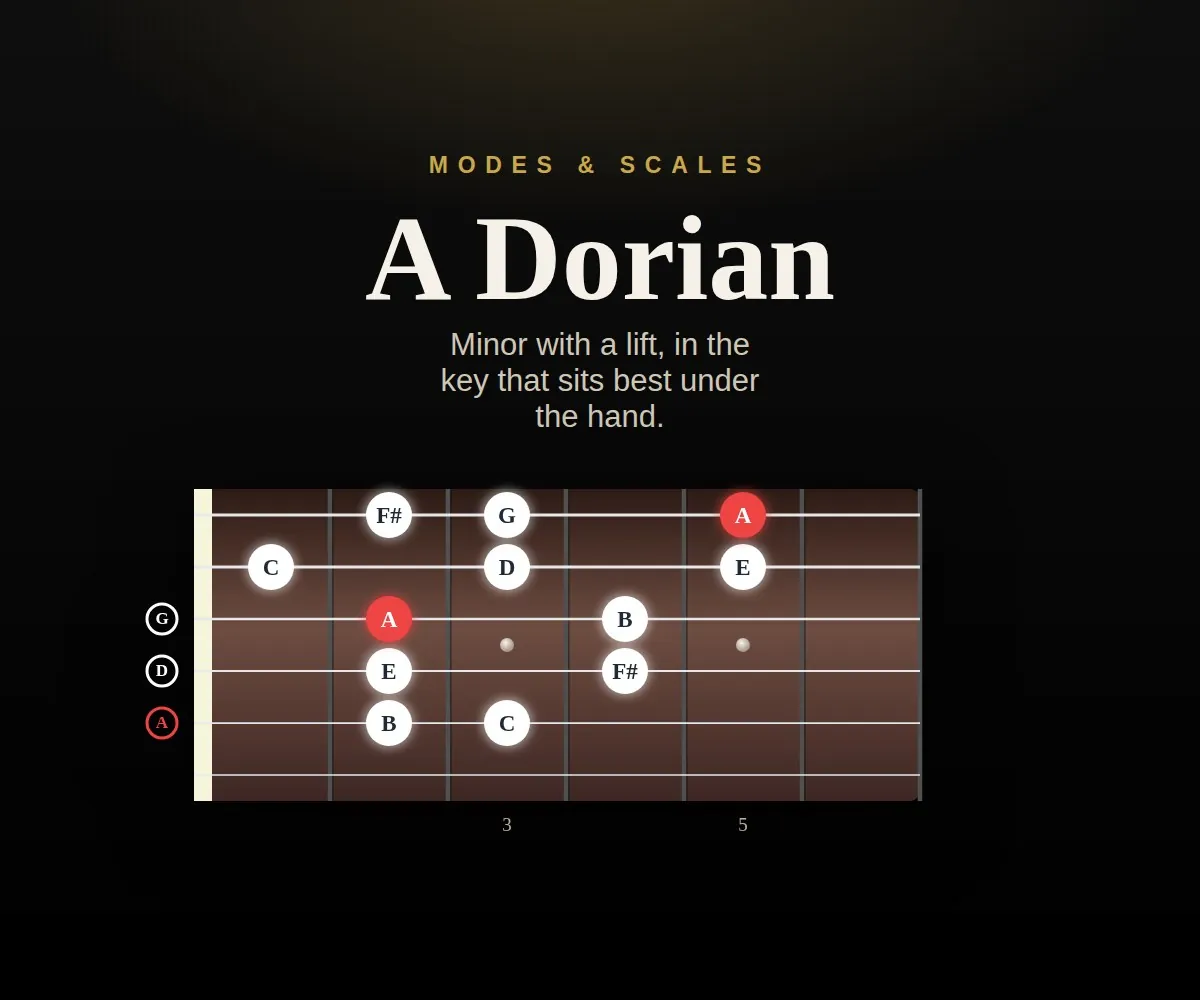
A Dorian uses the notes of G major starting from A. It is minor, but the natural 6th keeps it from ever sounding sad — the sound of funk, of modal jazz and of a thousand guitar vamps.
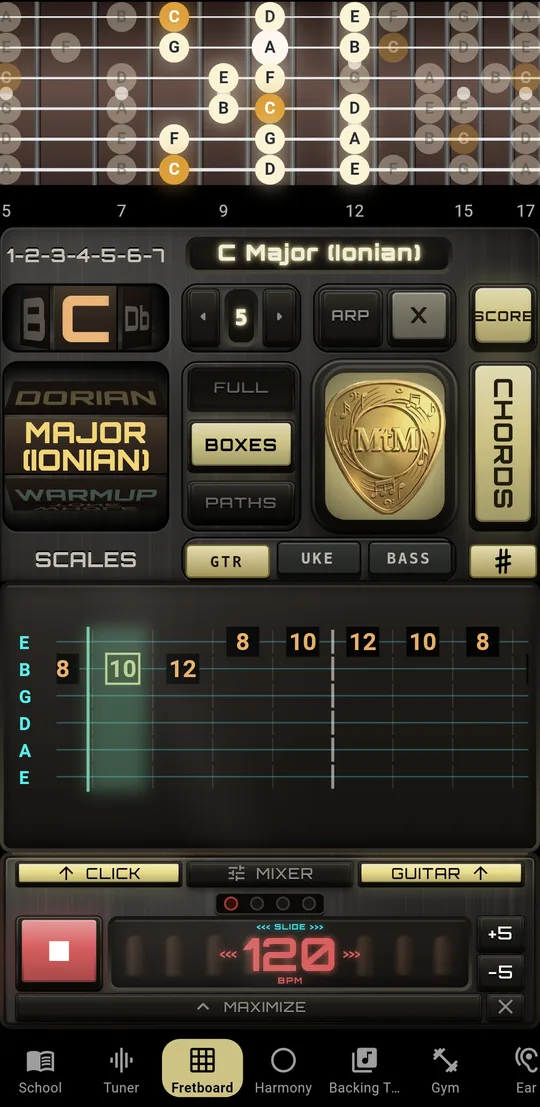 Play A Dorian on your phoneDownload free
Minor, with the 6th left natural
A Dorian is A B C D E F# G. It has the ♭3 (C) of any minor scale, but where natural minor would put F, Dorian puts F# — a natural 6 instead of a flat one.
- The ♭3 (C) makes it minor.
- The natural 6 (F#) is the one note that separates it from A minor.
- Compare A B C D E F G (Aeolian) to hear it.
Finding the F#
Play an Am7 chord and then land on F#. It should sound bright and slightly unresolved — not wrong, but lit from the side. That single note is the entire Dorian identity.
- Target the natural 6 over a minor chord to hear Dorian.
- It is the note that makes minor sound cool rather than sad.
- On the neck, it sits one fret above the natural minor's ♭6.
The vamp that proves it
Play Am7 to D7 and stay there. The D7 contains F#, so the progression itself forces the Dorian sound. That i–IV vamp is So What, Oye Como Va, and most funk rhythm guitar.
- Am7–D7 (i–IV) is the Dorian vamp.
- The IV chord is what carries the natural 6.
- Two chords is enough — modal music does not need changes.
One note separates Dorian from plain minor, and that note is why funk exists.
 Prefer paper? All 408 scale charts in one bookThe Guitar Chord & Scale Encyclopedia · paperback and KindleSee the book →
MoreThanModes.com · Visual. Clear. Musical.