D Phrygian
The darkest of the everyday minor modes.
Phrygian is a minor scale with a single, unmistakable twist: a flat second. That half-step above the root is the sound of flamenco, of metal, of tension that never quite relaxes.
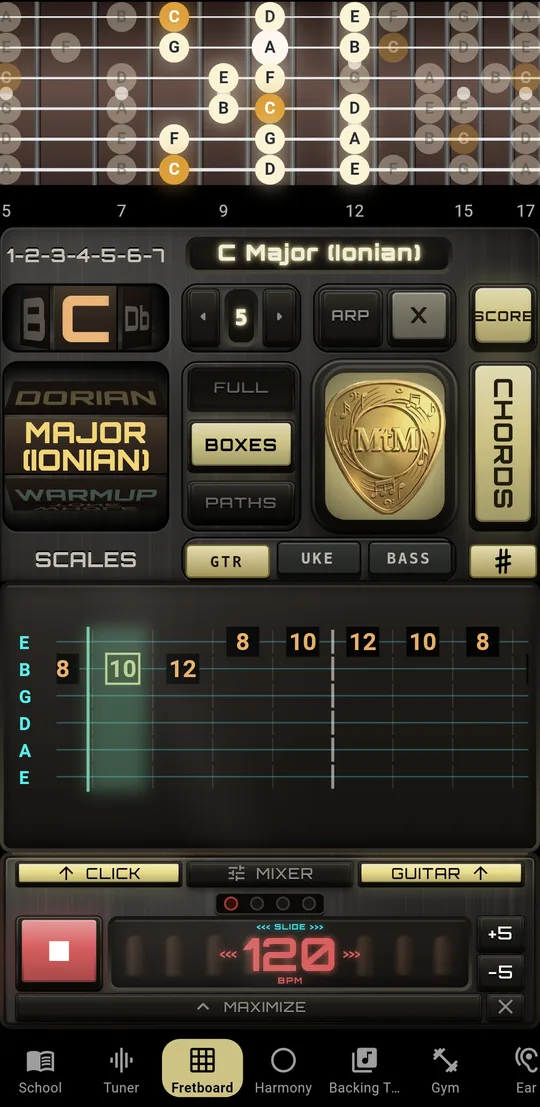 Play D Phrygian on your phoneDownload free
A minor scale, one step darker
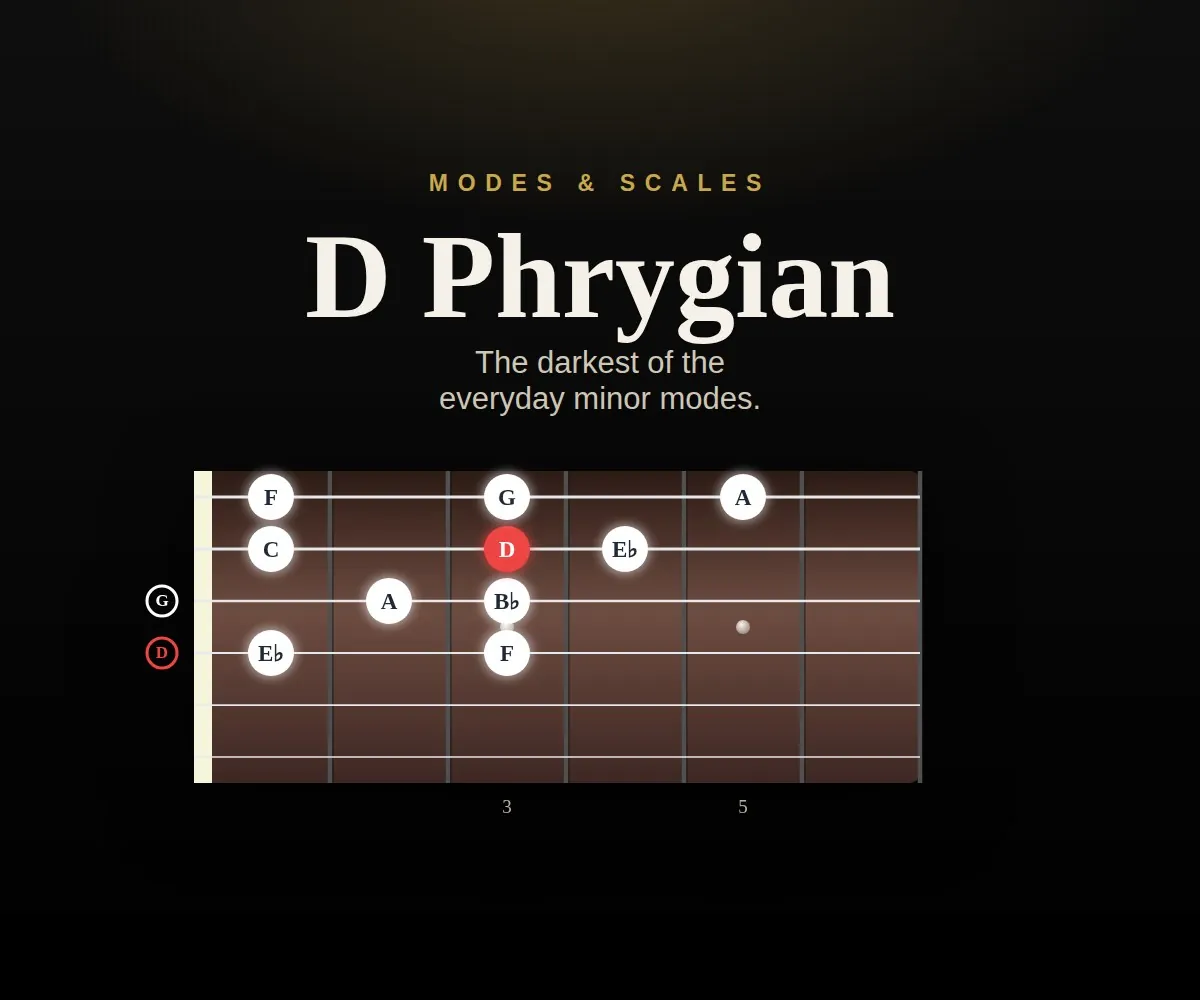
D Phrygian is D E♭ F G A B♭ C. Like every minor mode it has a ♭3 (F) — the note that gives it its sadness. What sets it apart is the ♭2: E♭, just one fret above the root.
- The ♭3 (F) is what makes it minor.
- The ♭2 (E♭) is what makes it Phrygian — no other common mode has it.
- It is the darkest of the seven major-scale modes.
The characteristic note: the ♭2
Play D, then E♭, then back to D. That half-step is the whole Phrygian identity — the flamenco cadence, the Spanish guitar, the menace under a film scene.
- The ♭2 sits one fret above the root — target it, then resolve home.
- It is the engine of the flamenco and Spanish sound.
- Over a static D root, that half-step is constant, usable tension.
How to make it sound Phrygian
Phrygian wants a rooted, static context. The classic move is a ♭II–I cadence — in D, E♭ resolving to Dm — or a low D pedal you riff over.
- The ♭II–I cadence (E♭ → Dm) is pure Phrygian.
- A low root pedal is the metal approach.
- Static beats busy: modal color needs room to breathe.
One flat second is all it takes. Learn to hear that E♭ pulling against the D, and the whole dark, Spanish world of Phrygian opens up.
 Prefer paper? All 408 scale charts in one bookThe Guitar Chord & Scale Encyclopedia · paperback and KindleSee the book →
MoreThanModes.com · Visual. Clear. Musical.