C Minor (Aeolian)
The natural minor color of C, from tonal origin to written form
C minor Aeolian is more than a box to memorize. It has a distinct minor color, a clear tonal origin, and a written form that helps you understand what you are hearing and playing. This lesson follows that path from sound, to map, to notation, and finally to tablature as a practical bonus.
1. What C minor Aeolian is
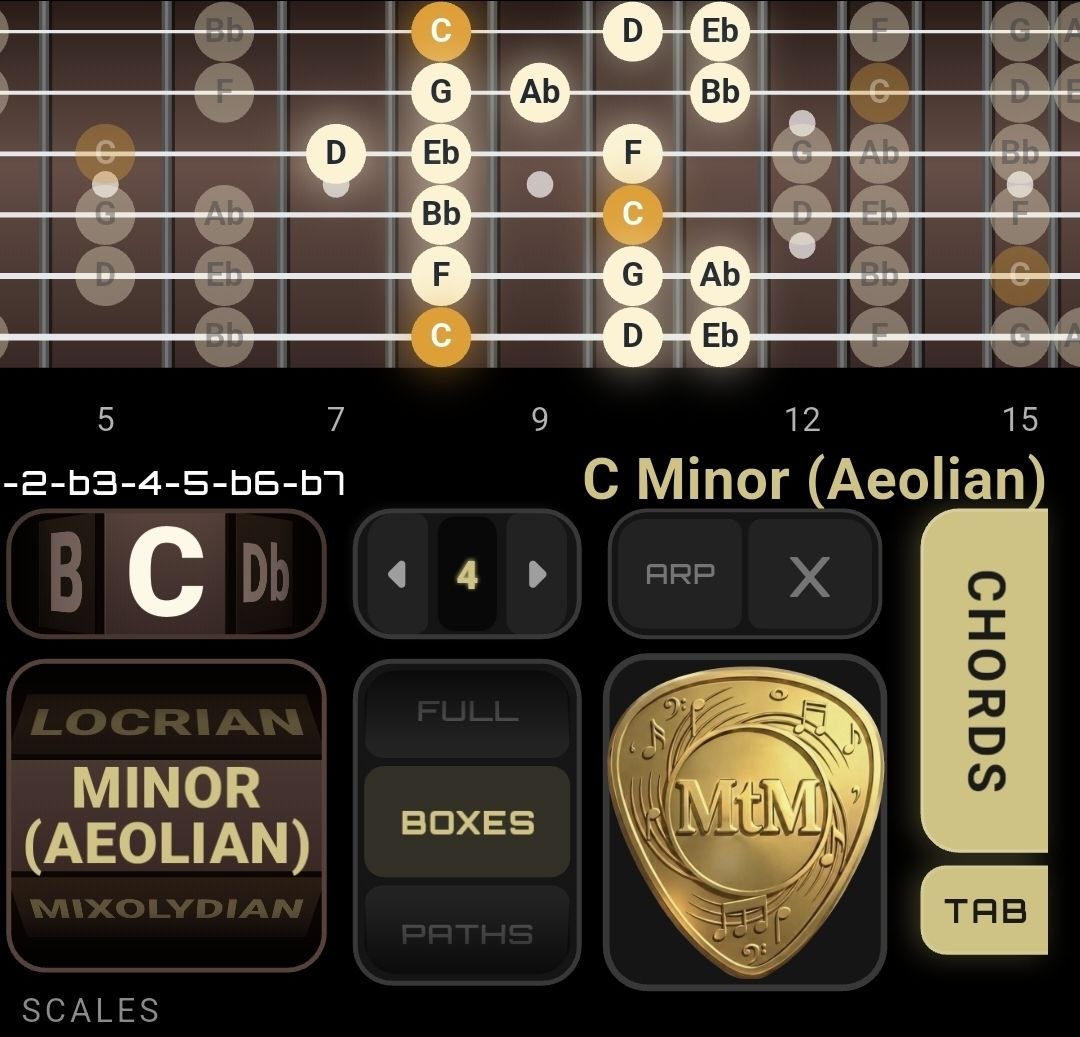
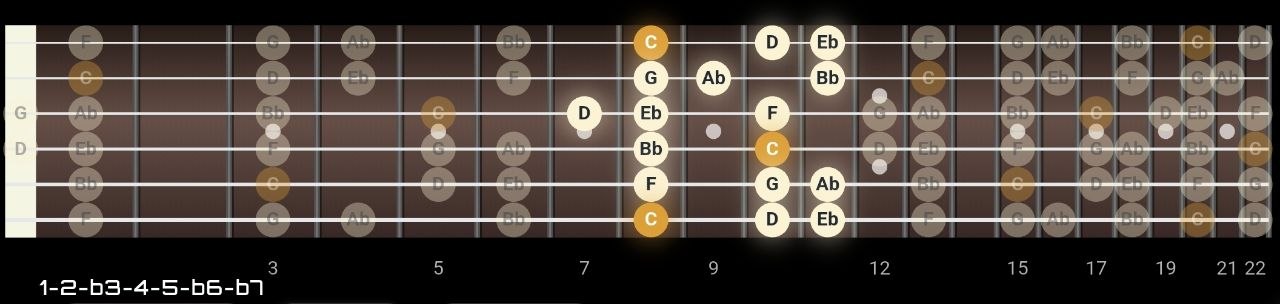
C minor Aeolian is the natural minor scale built from C, D, Eb, F, G, Ab, and Bb. Its formula is 1, 2, b3, 4, 5, b6, b7. What gives it its identity is the combination of the minor 3rd, flat 6th, and flat 7th, which creates a darker and more reflective color than a major scale. This is the sound many players instinctively associate with a pure minor mood.
2. Where it comes from and its relative major
C minor Aeolian comes from the same key signature as Eb major, which is its relative major. That means both scales share the same notes, but they do not feel the same because their tonal center changes. Seeing the full fretboard helps make that relationship clear: the note collection stays the same, but the musical gravity shifts when C becomes home instead of Eb.
3. Why reading it on staff matters
Reading this scale on staff notation matters because it teaches more than shape recognition. You begin to see the correct key signature, understand the actual height of each note, and connect the sound of the scale to written musical language. That makes your understanding stronger than simply memorizing fretboard patterns, because now you can recognize the scale both visually and aurally.

4. Summary and tablature bonus
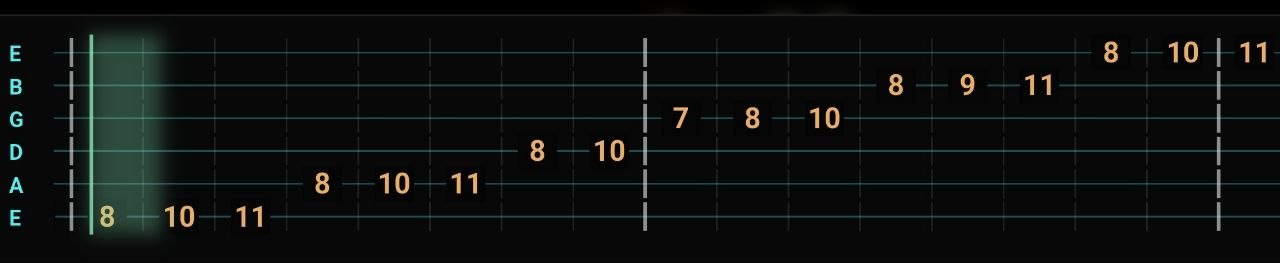
At this point, C minor Aeolian should feel clearer as a sound, as a tonal structure, and as a written system. The tablature works as a practical bonus for players who want to rehearse the scale directly on guitar. It does not replace deeper understanding, but it gives you a fast path to physical practice once the musical idea is already clear.